





Adeline Pivoine
As Africa enters 2026, artificial intelligence (AI) has quietly shifted from a futuristic idea to a governing force shaping health systems, economies, education, and state capacity. Across the continent, AI-powered tools are being deployed to diagnose disease, manage social services, score credit, and optimize public infrastructure. Yet beneath this momentum lies a critical question: is Africa exercising agency over AI, or drifting into a new form of external dependency?
From my perspective as a health researcher working in East Africa, AI’s promise is most visible in the health sector. Digital tools now support disease surveillance, clinical decision-making, and chronic care management, areas where resource constraints have long limited impact. However, most of these systems are developed, trained, and governed outside the continent. African data fuels global algorithms, but African institutions rarely control how those algorithms are designed, validated, or regulated.
This imbalance carries real risks. AI models trained primarily on non-African populations may misinterpret local disease and health patterns, social behaviors, or environmental factors. In health, this can translate into biased diagnostics or ineffective interventions. In finance and governance, algorithmic decision-making may unintentionally reinforce exclusion, especially for informal workers, rural communities, and women. Without strong African oversight, AI risks reproducing historical power asymmetries this time through data and code rather than rawmaterials.

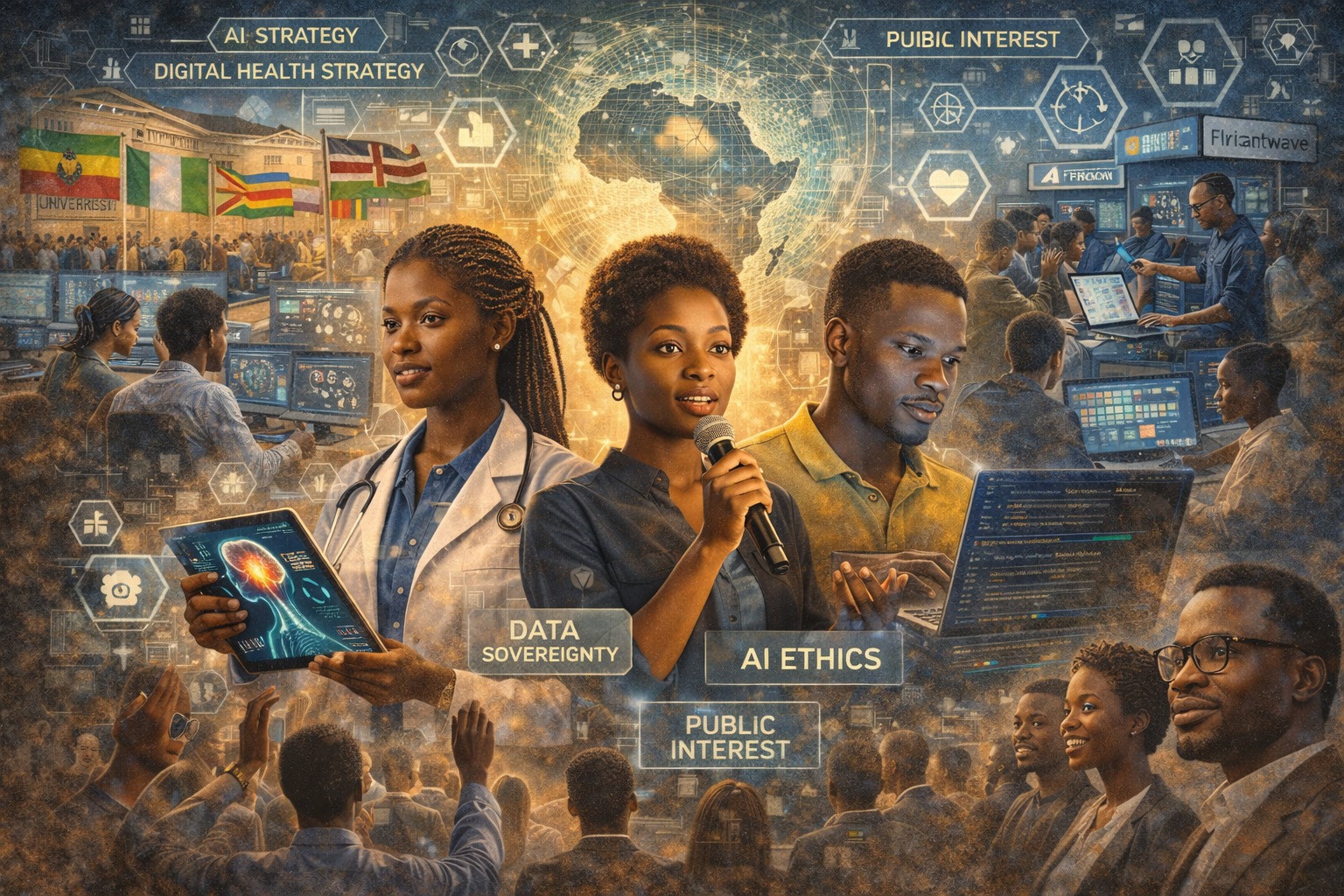
Yet dependency is not inevitable. Across Africa, signs of digital agency are emerging. Governments are developing national AI and digital health strategies. Universities are investing in data science and interdisciplinary research. Startups are building locally grounded solutions that reflect African realities rather than imported assumptions. Most importantly, African youth innovators, researchers, and policy thinkers are increasingly shaping conversations on AI ethics, data sovereignty, and public interest technology.
True African agency in AI will depend on more than technical skills. It requires deliberate leadership choices. First, Africa must strengthen data governance frameworks that protect citizens while enabling responsible innovation. Second, regional collaboration is essential: fragmented national approaches will limit bargaining power with global technology actors.
Third, public-sector investment in digital public infrastructure, especially in health, education, and research, can ensure AI serves collective wellbeing rather than narrow commercial interests. AI should not be framed as a binary choice between adoption and resistance. The real challenge is how Africa engages. Equitable partnerships, co-creation of knowledge, and local ownership of data and models must become non-negotiable principles. Otherwise, AI may deepen dependency rather than accelerate transformation.
In 2026, Africa stands at a decisive moment. If guided by ethical leadership, regional solidarity, and confidence in its own intellectual capital, AI can become a tool for African-defined development. If not, it risks becoming the latest layer of external control, subtle, technical, and deeply entrenched. The direction we choose now will shape African futures for decades to come.
Written by Adeline Pivoine
Adeline Pivoine Gusenga is a Rwandan Global health researcher and MINDS Alumna with experience in Global health and biomedical research. Her interests focus on public health, biomedical research, data governance, and African-led innovation in health systems.