
In 2025, we experienced several Youth-led protests across countries such as Kenya, Madagascar, Nepal, and Tanzania.
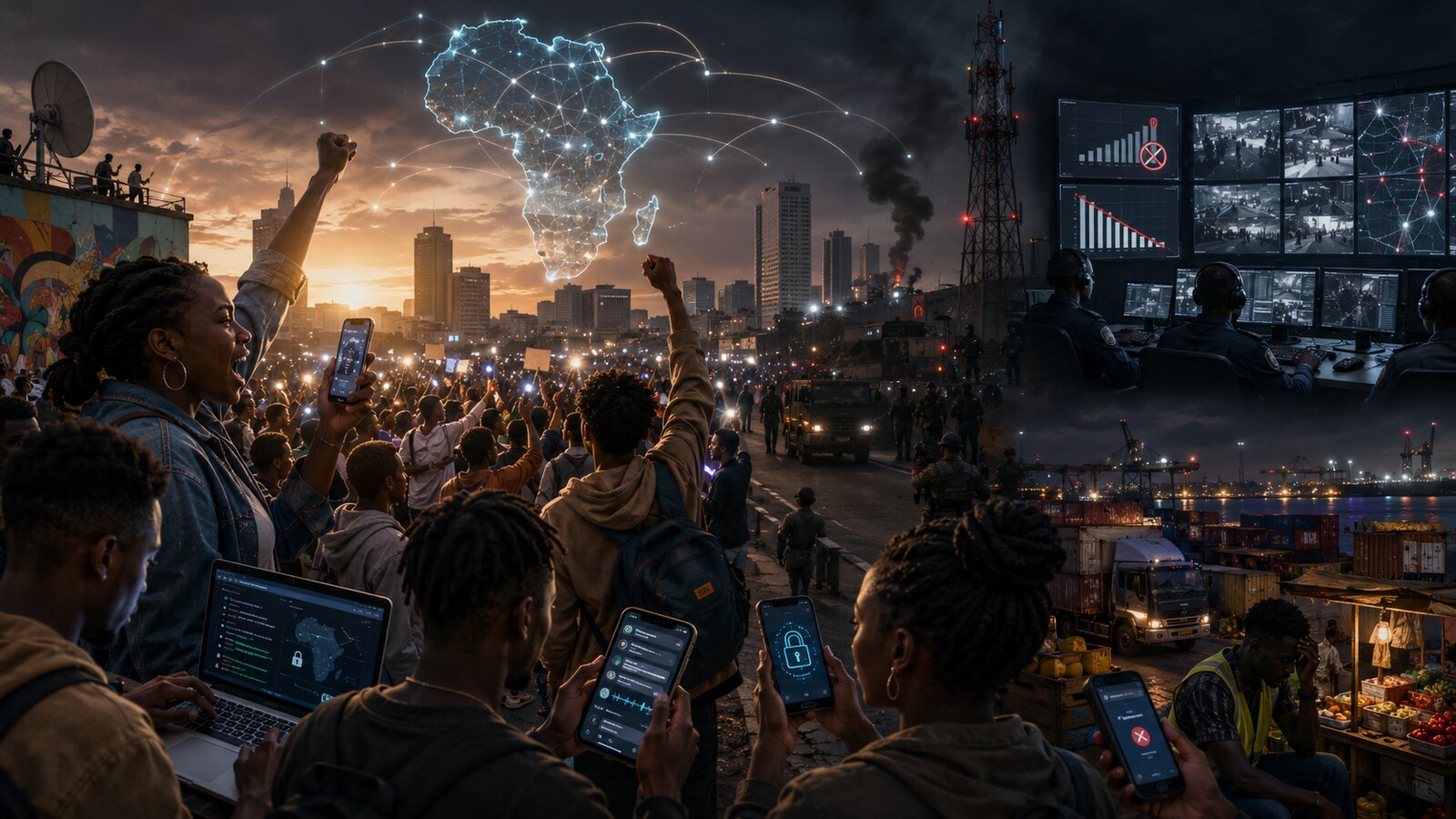
These revolutions, fuelled by frustrations over an endemic of governance failures, have been coordinated through the digital prowess of younger generations who adopted digital space as an arena for economic survival and political expression.
Social media is now our “town square” where change is initiated, shifting from “online
frontlines” to high-impact physical mobilisation. This movement has unsettled the old-guards, who now see digital spaces as a threat to their power-guarding ambitions. In response, some states are weaponizing “sovereignty” and
“cybersecurity” to justify internet shutdowns, violating constitutional rights such as freedom of expression and access to information.
In 2026, this collision is reshaping African geopolitics through three key areas:
1. Leaderless Geopolitical Actors
These online movements use decentralized hashtags and encrypted platforms rather than formal parties. Existing rules of engagement are devoid in how to peacefully deal with that. African states and the African Union must rethink protocols that are designed for digital uprisings.
2. Economic Stability vs. Political Survival
According to Business Insider, in 2025 alone, internet shutdowns cost an estimated $1.11 billion in Sub-Saharan Africa. Leaders face a dilemma: Africa needs high-speed internet to fuel economic growth strategies such as the AfCFTA, but they fear connectivity will be used to organize their downfall. Finding a balance between connectivity and political control is critical.
3. Transnational “Youth” Solidarity
Digital activism in 2026 is not confined by borders. Youth share “digital survival kits such as VPN configurations and encrypted comms across borders while governments expand surveillance and cross-border security cooperation to monitor and disrupt networked protest.
A Generation Redefining Sovereignty
We are an awakened generation that refuses to separate our digital identity from our physical rights. True sovereignty will not be found in firewalls, but in the trust of a population that feels served. Our leaders must transition from a politics of control to a politics of contribution.
The events of 2025 and 2026 have brought us to a crossroads. As young people, the digital space is not a secondary world, but a heartbeat of our civic life. For our leaders, viewing the internet as a threat to be silenced is a failure to recognize who we are.
These movements are not random outbursts; they are a rejection of the governance failures that have stalled our continent. The youth are not asking for permission to be heard but rather holding leaders accountable to their obligations. True sovereignty will not be found in firewalls or VPN bans, but in the trust of a population that feels served.
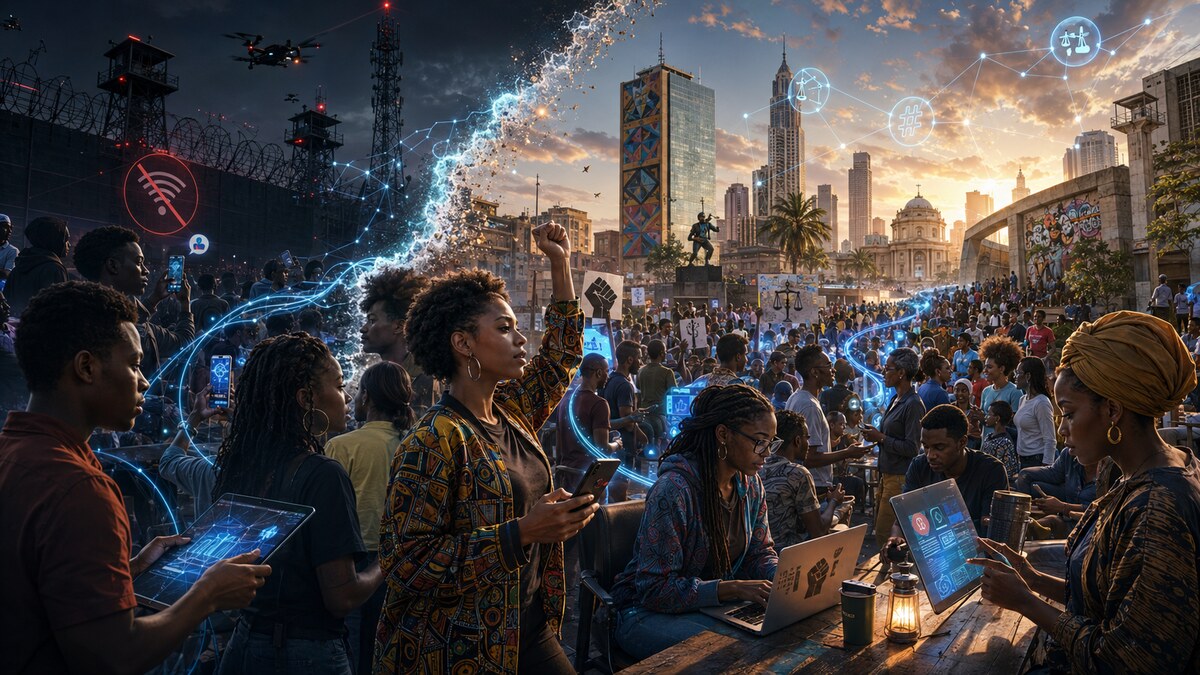
Stability will not come from silencing our hashtags, but from addressing the corruption they expose. Our leaders must transition from a politics of control to a politics of contribution, embracing our innovation to build the Africa we deserve.