

As a Cloud engineer managing cloud infrastructure across multiple clients, I have witnessed firsthand how Africa’s relationship with AI sits at a critical crossroads between agency and dependency, and the question at this point from my perspective is not whether AI will transform our continent, it is more of a question of whether we will be architects of that transformation or merely consumers of solutions that were built elsewhere.
The Current Reality: Dependency by Default
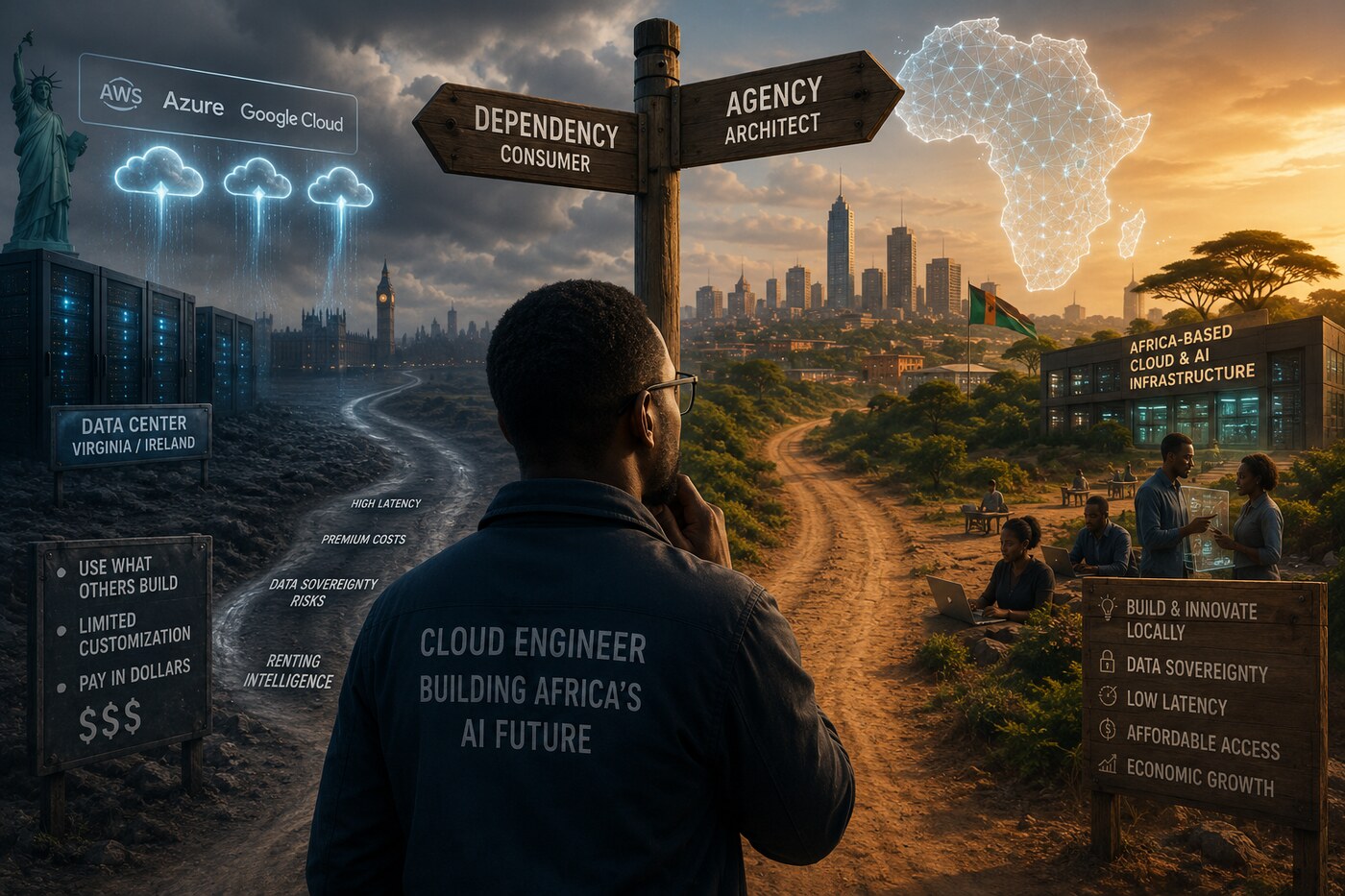
In my daily work with the various cloud service providers, I have observed a concerning pattern. African organizations rely almost entirely on western cloud providers — AWS, Azure, Google Cloud — for AI and machine learning capabilities. We deploy models we didn’t train,use APIs we can’t customize beyond surface parameters, and pay premium prices for
compute resources (like GPU instances – virtual machines) hosted thousands of miles away– this alone defeats the purpose of data sovereignty. And this goes beyond just technical issues, but it can also be an economic one as well because when businesses in Lagos, Kigali or Nairobi need AI-powered solutions, they’re sending data to Virginia or Ireland for processing, paying in dollars, and accepting latency that would be unacceptable in London or Singapore. We’re essentially renting intelligence rather than building it.
Glimpses of Agency: What I’ve Learned
However, in my experience troubleshooting production systems and optimizing infrastructure, I have learnt that agency begins with understanding the fundamentals. You can’t build sovereignty without technical capacity. Africa needs engineers who don’t just consume cloud services and act as technical supports engineers but also have a deep
understanding of how these technologies work. Engineers who can design systems, optimize costs, and make informed architectural decisions. I’ve seen African developers create innovative solutions using these same tools—fintech
platforms processing millions of transactions, e-learning systems reaching remote communities etc., so we are certain that these talents exist. What’s missing is the infrastructure ecosystem that would allow us to compete on equal footing.
The Path to Agency
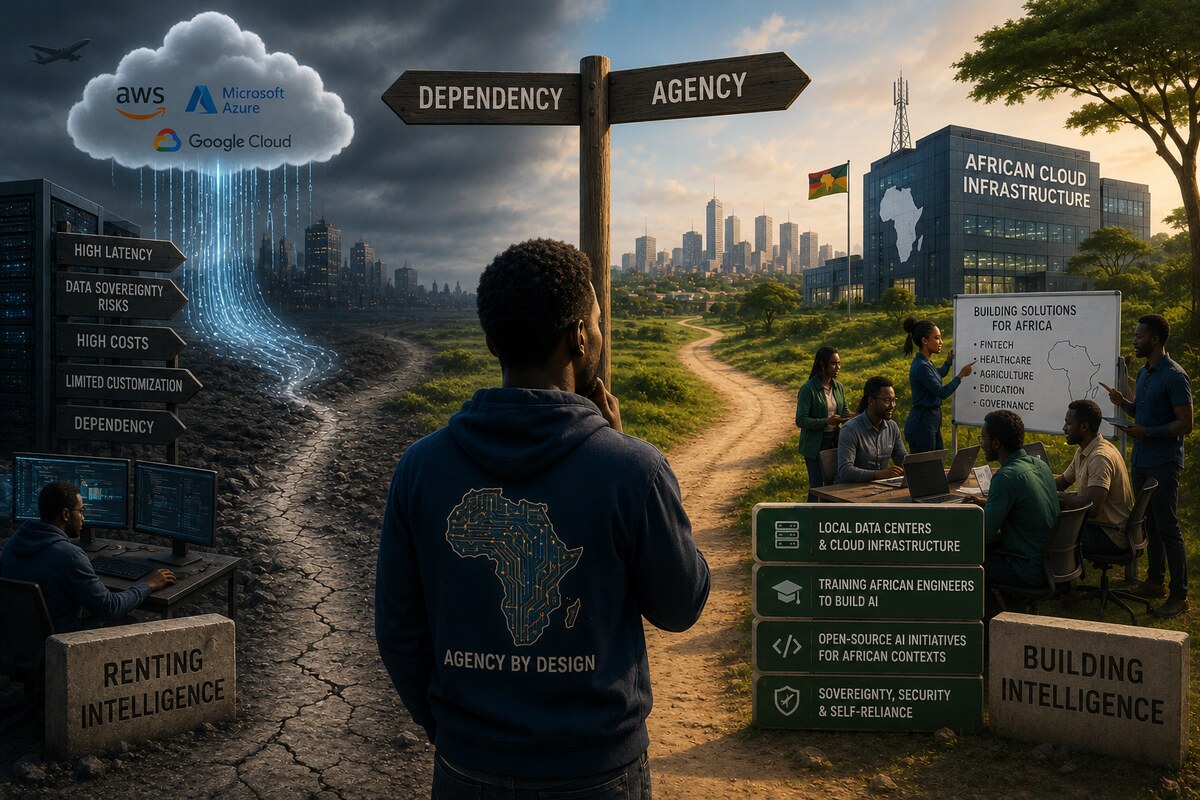
True AI agency for Africa requires three shifts. First, investment in local data centers and cloud infrastructure to reduce dependency and latency while keeping data sovereignty intact.
Second, emphasis on training African engineers not just to use AI tools, but to build them— understanding machine learning fundamentals, not just API calls.
Third, support for open-source AI initiatives that allow customization for African contexts,
languages, and problems.
In my field, I’ve learned that infrastructure is invisible until it fails. The same applies to AI dependency, it might seem convenient right now until geopolitical tensions restrict access, prices surge, or services simply don’t serve African needs.
Our Choice
As we explore educational and leadership opportunities across Africa, our generation of technical professionals must ask: Will we build the infrastructure that empowers African AIagency, or will we remain skilled operators of systems controlled elsewhere? The answer will shape whether AI becomes a tool for African development or another channel of
dependency. The technologies exists, so does the talents exists. What we need now is intentional
investment in buildings not just consuming the AI future Africa deserves.