
African Perspectives of Today’s World
Nothando Phuti is a MINDS Scholar Alumni and PhD candidate at the University of Johannesburg, South Africa. Her research interests are in migration and decoloniality.
Framed as an antidote to social disorder, cultural anxiety, and the failures of neoliberal globalisation, the recent rise of global fascism carries profound implications for Africa’s present realities and future trajectories.
Liberal internationalism, long promoted to Africa as the universal pathway to development, has been abandoned by its chief architects as it no longer serves domestic stability in the United States. In its place, securitisation, protectionism, and nationalist economic agendas are taking hold, exposing the fragility of African development models premised on external frameworks, aid dependence, and uneven global integration
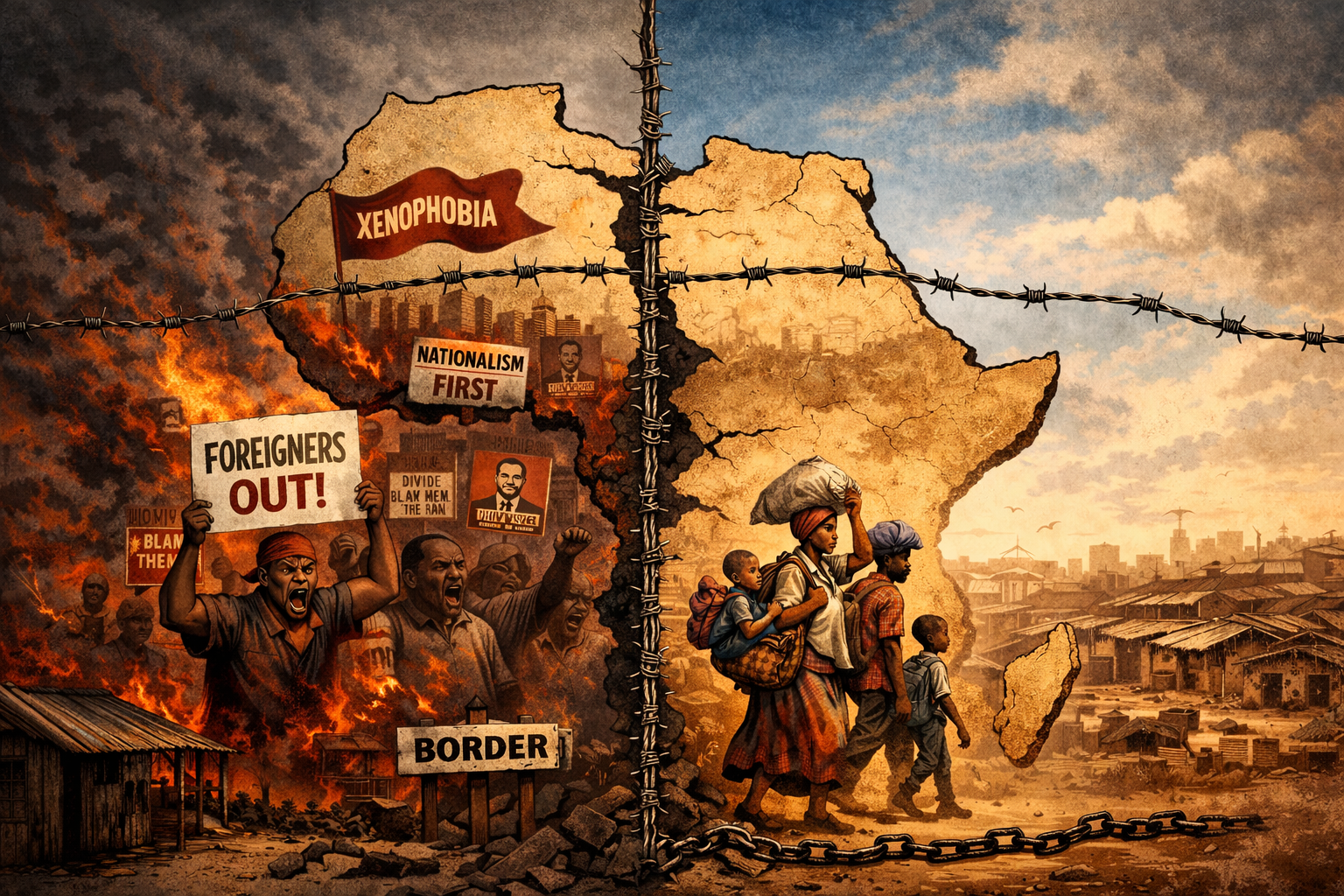
Beyond fragmenting the global order, these geopolitical shifts are also shaping the resurgence of un-African xenophobic narratives across the continent. In African societies marked by high unemployment, collapsing public services, and widening inequality, xenophobia becomes a convenient political tool. As authoritarian and exclusionary ideologies gain legitimacy globally, they provide both the language and justification for local elites and political actors to redirect popular frustration away from structural economic failures and toward migrants, refugees, and other marginalised groups, often fellow Africans.
This scapegoating is particularly dangerous in the African context, where colonial borders artificially divided historically connected societies, and where regional labour migration has long been central to livelihoods, economies and social reproduction. Mobility in Africa is a crisis; it is an fundamental feature of its social and economic systems. Framing migration as a threat therefore distorts historical realities while deepening social fragmentation.
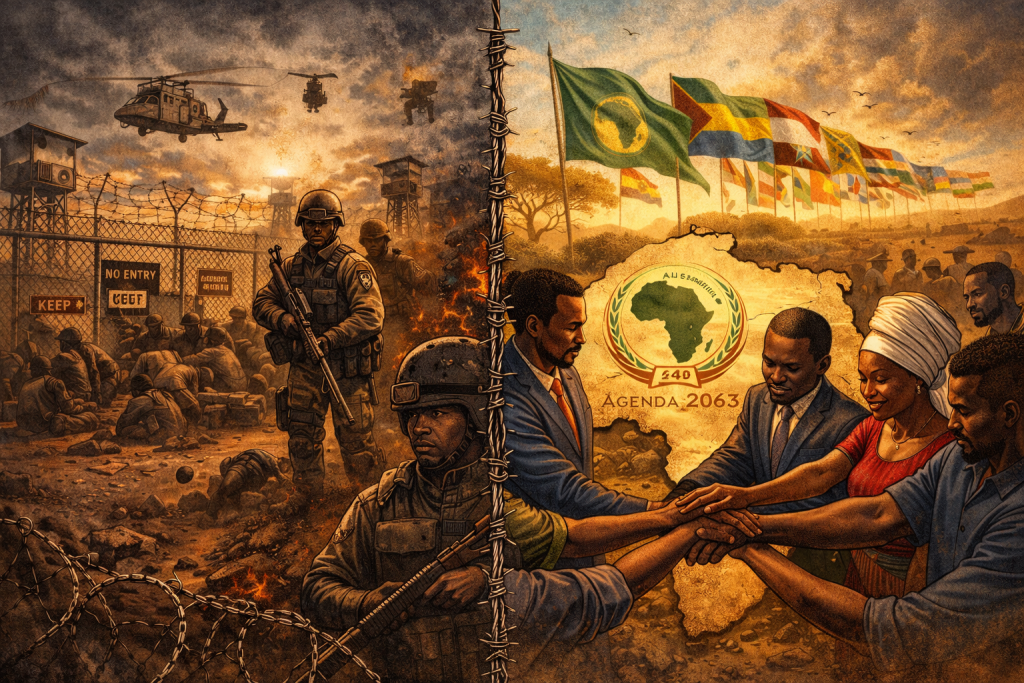
As Western states harden borders and increasingly externalise migration control, African governments face mounting pressure to adopt securitised approaches to migration governance. This includes the criminalisation of migrants, the militarisation of borders, and the normalisation of violence against the poor and displaced.
Such approaches not only undermine human dignity, but also erode pan-African solidarity and directly contradict the African Union’s Agenda 2063, particularly its commitments to free movement, regional integration and shared prosperity.
Yet this moment also presents a strategic opening. It lays bare the long-standing hierarchical relationship between Africa and the Western world, one that Africa can no longer afford to sustain.
Africa cannot continue passively absorbing the consequences of Western policy thinking, nor can it outsource its developmental imagination to external actors whose own models are collapsing.
Development cannot be built on exclusion, nor can sovereignty be defended by turning Africans against one another.
Resisting global authoritarianism must therefore also mean confronting home-grown xenophobia and the political economies that sustain it.
A genuinely transformative path forward requires reclaiming pan-Africanism not as rhetorical, but as a material project, one that affirms mobility, dignity, shared struggle and collective prosperity across the continent.
Written by Nothando Phuti