As the world moves deeper into 2026, uncertainty has become the defining feature
of global affairs. Geopolitical tensions, economic volatility, climate shocks,
democratic backsliding, and rapid technological change are reshaping how nations
exercise power and cooperate. In this environment, Africa’s central question is no
longer whether it matters globally but how it chooses to show up.
In a fractured global order, accountability is Africa’s strongest diplomatic and
economic asset. The leadership posture Africa needs in 2026 is neither defensive nor
dependent. It is accountable.
For decades, Africa’s engagement with the world has often been framed through
crisis, that is, aid, conflict, or humanitarian need. Yet today, the continent is more
youthful, connected, and strategically significant than ever before. What has lagged
behind is not relevance, but credibility. And in a fractured global order, credibility is
built through accountability.
Accountable leadership reshapes Africa’s position at home and abroad. It signals to
citizens, investors, and international partners that power is exercised as a public
trust, not a personal entitlement.
Accountable leadership signals that power is a public trust, not a personal entitlement.
This posture begins domestically. Leaders who take responsibility for outcomes
rather than blaming history, donors, or external systems build legitimacy with their
citizens. Strong institutions that check executive power, protect the rule of law, and
enforce consequences for corruption create stability in uncertain times.
Botswana offers a powerful illustration. Since independence, the country prioritized
institutional integrity, transparent management of natural resources, and respect
for the rule of law. Over time, this accountable leadership posture translated into
sustained growth, political stability, and global credibility.
Where institutions are predictable, societies are resilient even in uncertain times.
Ghana provides another instructive case. Despite challenges, peaceful transfers of
power, a vibrant media, and competitive elections have strengthened trust and
enhanced Ghana’s regional and global standing.

Globally, accountability enhances Africa’s bargaining power. Countries with
transparent governance negotiate more confidently on climate finance, debt
restructuring, trade, and security partnerships.
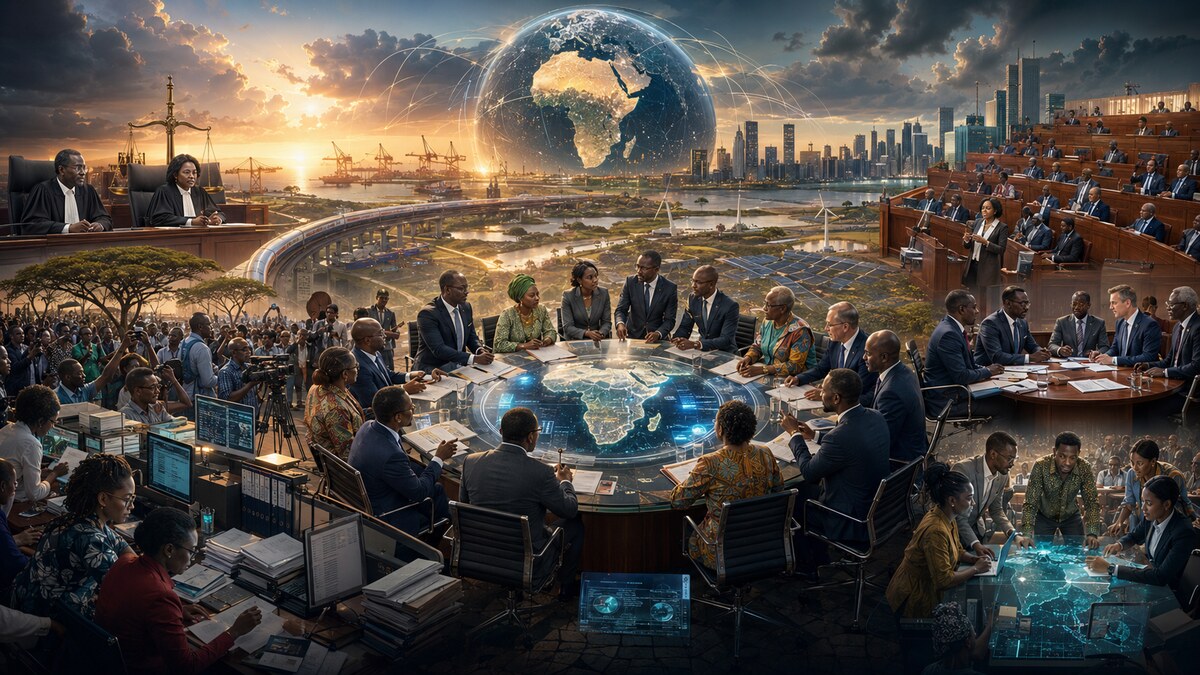
An accountable Africa speaks with coherence and moral authority on the global
stage. In 2026 and beyond, accountability must be collective and institutionalized at
the continental level. African Heads of State and the African Union must lead
decisively.
First, the AU and regional bodies must model transparency and peer accountability,
moving beyond symbolic commitments. Secondly, Heads of State must strengthen
judicial independence, parliamentary oversight, and anti-corruption institutions.
Third, civic space and press freedom must be protected as strategic assets.
Fourth, Africa’s global engagements must be anchored in transparency. Deals
negotiated in secrecy erode trust and credibility. Finally, leadership development
and accountability training must be placed at the center of Africa’s long-term
agenda.
Leadership renewal is not optional for Africa, it is existential. At LeadMinds Africa,
we believe accountability is not a constraint on leadership, it is its foundation. Africa
does not need louder rhetoric, it needs leaders who can be trusted.
The leadership posture Africa needs in 2026 is clear: confident, credible, and
accountable. With accountability at its core, Africa can move from the margins of
global decision-making to a respected voice shaping the future.