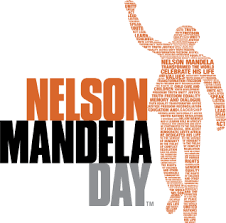
On the 18th of July every year, the world stands still to celebrate Mandela Day, a global call to action inspired by the life and times of Nelson Rolihlahla Mandela. It is a day far beyond mere observance, a reminder of the profound call to embody the principles that defined a man who journeyed from prisoner to president, from the symbol of a resistance to an icon of reconciliation. His is not a static edifice of a forgotten past, but a powerful, self-established legacy that remains a brilliant and multifaceted beacon emitting a light of hope, the flame of resistance, the reverberation of resonance, the necessity of relevance, and the stabilizing virtue of humility in service. To unpack this legacy is to understand how the life of one man, singularly dedicated to justice and the dignity of all humanity, can shape an enduring blueprint for a more just and compassionate world.
The Beacon Of Hope: Lighting the Path from Darkness
The single greatest legacy Mandela left the world was, arguably, the radicalization of hope. Having been held in harsh captivity for twenty-seven years (27) under the oppressive hand of apartheid, he could have allowed despair, bitterness, and nihilism to take root. Instead, Robben Island became the crucible wherein hope was not simply experienced but painstakingly forged into an impenetrable shield and an unbreakable sword.
It was not the superficial, superficial hope, but an unwavering belief, grounded in unshakeable conviction, that the arc of justice bends towards fairness, however slow that process might be. The dramatic events of 1990 that saw his release, and his elevation to South Africa’s first democratically elected president in 1994, were not simply political turning points but were also profound statements to the entire globe that injustice is not eternal, that chains can indeed be broken, and that the indomitable human spirit can indeed triumph over profound and systemically-based evil.
This beacon of hope continues to cast a glow for all struggling under regimes of oppression, for those in communities overlooked by mainstream society and those denied due process or dignity, and for every single person facing what seems to be insurmountable odds. Mandela has shown us that hope is the indispensable and fundamental fuel for a struggle of any considerable length and duration. It is the necessary mental infrastructure that allows us to conceive of a world beyond our current hardships, and to work assiduously towards the realization of that vision.
On Mandela Day, hope is not merely an emotion but an action, channeled into the 67 minutes of service that each year symbolize the 67 years Mandela dedicated to the struggle for justice. It’s a poignant demonstration that when hope is married to effort, the outcome is a seismic wave of change.
The Fire of Resistance: An Unyielding Force against Injustice
No exploration of Mandela’s legacy would be complete without an examination of his resolute stance of resistance. As a founding member of the ANC’s armed wing, Umkhonto we Sizwe, he made the difficult but ultimately defining choice that when appeals for dialogue and peaceful protest are met with the barrel of a gun and with a response of violence, those oppressed have not only the right but the responsibility to defend themselves. This facet of his life often gets overlooked in simplified telling’s of the story of this global grandfather figure, but it serves as an important reminder that Mandela’s life was an active struggle. And this struggle was not simply an aimless fight, but a carefully calculated and principled resistance with liberation not retribution as its primary objective.
This beacon of resistance is a crucial lesson in the current global climate. It tells us that resistance isn’t just about opposing, but about a proactive and deliberate effort to break down systems of oppression in order to construct a better society. It illuminates the crucial difference between the violence inflicted by oppressors and the resistance offered in self-defense by the oppressed.
In an age characterized by widespread systemic racism, economic disparities, and increasing trends toward authoritarianism, Mandela’s legacy validates the idea of resistance. He championed a resistance that was strategic and well-disciplined, never sinking to the depths of the hate it sought to overcome.
The Resonance: An Echo That Transcends Time and Borders
What gives Mandela’s created legacy its profound power is the fact that it resonates with people around the globe. His experience of fighting against apartheid, of championing principles of non-racialism and reconciliation, and of steering his country towards an inclusive nation have transcended South Africa. The language and concepts born from his struggle have echoed in peace talks and national dialogues in places as varied as Northern Ireland and Colombia. Mandela’s remarkable capacity for forgiveness and reconciliation the ability to hug the men who had incarcerated him, to don the jersey of the very rugby team that had become a symbol of racial segregation, and to lead a newly democratic country with empathy instead of vengeance has served as a global guidepost for those seeking transitional justice and a more harmonious society.
Mandela achieved this through a keen understanding of symbolism and moral authority, by deliberately crafting his public persona through acts of great symbolism. His post-release gestures, in particular, were carefully constructed performances aimed at calming the fears of South Africa’s white minority and inspiring hope in the Black majority. It created a legacy which has come to define the best of our shared humanity. On Mandela Day, his legacy encourages global unity and reminds us that justice anywhere is inseparable from justice everywhere, turning one life into a universal narrative for change.
The Relevance: Addressing Today’s Challenges
A legacy which does not address current concerns risks becoming merely an artifact of the past. Mandela’s legacy, however, remains vibrantly relevant. The world is currently beset by deep divisions, political polarization, conflicts rooted in identity politics, the rise of xenophobia and the erosion of democratic norms. Against this backdrop, the very heart of Mandela’s philosophy to be free is not merely to cast off one’s chains, but to live in a way that respects and enhances the freedom of others is a timely and vital antidote.
His relevancy is palpable in movements such as Black Lives Matter, which echoes the anti-apartheid struggle’s unwavering demand for human dignity and the dismantling of systemic oppression. It’s evident in the call for political leaders capable of unifying and transcending divisions rather than exploiting them. His enduring insistence that poverty is a human rights issue – Overcoming poverty is not a gesture of charity.
It is an act of justice; speaks directly to today’s alarming global inequalities. Mandela Day calls us to translate these timeless principles from historical homage to tangible action in the face of climate change, refugee crises and the digital divide, posing the essential question of how we shall build just and inclusive societies in the 21st century.
The Unwavering Service to Humility: The Cornerstone of Greatness
Perhaps the least intuitive but most potent component of Mandela’s beacons of legacy is the humility in his service. After attaining the highest level of power, and experiencing an outpouring of global admiration and affection, he chose to serve only a single term as president, demonstrating a remarkable refusal to succumb to the personality cult that can so often be the downfall of liberators. He actively resisted the temptation to perpetuate his rule in favor of the simple principle of service to the cause, to the nation, and ultimately, to the idea of democracy.
This humility was not a sign of weakness but was a testament to immense inner strength and profound wisdom. It was a signal to South Africans and the world that the goal was always larger than the individual, and that the healthy future of a democracy depended on a smooth and peaceful transfer of power. This commitment to service over self serves as the vital cement which binds together the other beams of his powerful legacy. Without humility, hope can become arrogance. Resistance without humility can spiral into tyranny.
Resonance without humility will sound hollow. And relevance without humility is reduced to an intellectual exercise. The 67 minutes of service that has now become globally associated with Mandela Day and inspires millions to volunteer time and effort to support worthy causes, provides an institutionalization of this critical lesson. It democratizes his legacy, proving that even the smallest act of individual service mentoring a young person, cleaning up a local park, caring for a vulnerable individual is an integral part of the same vast and meaningful struggle for justice and human dignity that he himself championed with such courage and dedication.
In Conclusion:
Nelson Mandela not just gave a legacy, he built it; a legacy built with his carefully curated moral weight. The beacon that he launched a beacon built from the combined lights of hope, resistance, resonance, relevance, and humbleness – guides the path still. Therefore, Mandela Day is not a date on the calendar that is simply to be observed. Mandela Day is the active engagement with a live example for human existence; it is a device by which we annually calibrate how we are living in our lives and societies in relationship with the example set by the person who transformed a state of unbelievable pain and suffering into an unstoppable impetus for universal good. He proves a life that is lived, in that that it can create a legacy and his legacy proves that even after a life is extinguished the beam light continues to illuminate the world in which that individual has lived, the world which it has helped to change and the world that has to continue on into greater light, into the world of the greater human condition.
In the current global scenario when it is hard to find anything more that inspires to a greater purpose than our current predicaments, Mandela Day serves as the example of a light that continues to burn.