




Gifty Osei
Africa’s technological future is not being built by accident. It is being engineered, deliberately. And increasingly, African women are involved in designing and building that future. Across Africa, women engineers are rewriting the continent’s technological narrative. From Ghana to Nigeria, South Africa to Cote D’Ivoire, women are building the digital infrastructure, developing AI solutions, and creating innovations that are transforming lives and positioning Africa as a hub of engineering excellence.
Building Africa’s Digital Backbone
The involvement of women in Africa’s technology future is not a recent affair. When Funke Opeke returned to Nigeria in 2005 after two decades working with Verizon Communications in New York, she confronted a stark reality: Nigeria’s internet connectivity was severely limiting the country’s economic potential. Rather than accept this as an immutable constraint, she decided to build the solution. In 2008, Opeke founded MainOne, which built West Africa’s first privately owned, open access 7,000-kilometer undersea high-capacity cable submarine stretching from Portugal to West Africa with landings in Accra, Dakar, Abidjan, and Lagos. An electrical engineer with degrees from Obafemi Awolowo University and Columbia University, Opeke transformed MainOne into West Africa’s leading communications services and network solutions provider before it was acquired by Equinix for $320 million in 2022.
Building Financial Inclusion Against all Odds
Diagnosed with cerebral palsy at age one, Farida Bedwei’s introduction to computers came through necessity: using a typewriter as an alternative to handwriting. This early adaptation laid the foundation for a career that would transform microfinance across Ghana. Farida Bedwei co-founded Logiciel in 2011, serving as Chief Technology Officer. Under her technical leadership, the company developed gKudi, a cloud-based banking software suite designed specifically for microfinance institutions. Currently, 130 microfinance organizations nationwide utilize gKudi to deliver services to the informal sector, where access to traditional banking remains limited.
Restoring Dignity Through Medical Technology
In 2015, Lesotho-born engineer Nneile Nkholise, founded iMed Tech, pioneering the use of 3D printing technology to create external breast prostheses for cancer survivors. The Neyne Prostheses initiative aims to provide 1,000 prosthetic breasts to low-income mastectomy patients who cannot afford surgical reconstruction or commercial implants. The prosthetic breasts are fabricated from biocompatible silicone elastomer that can be placed directly against skin. Her company has already impacted over 150 women with prosthetic solutions.
Digitizing Commerce for Economic Empowerment
In Accra, Ghana, Marie-Reine Seshie is revolutionizing SME operations with Kola Market, a data-driven inventory financing and sales insights platform. Kola Market was born from her experiences watching her mother struggle with inconsistent stock levels in her grocery store. The platform now serves a critical need across West Africa. Since 2021, Kola Market has helped over 500 small businesses increase sales and profits by 25 percent on average, and deployed over $5.8 million in gross merchandise value through product financing and distribution of fast-selling items. Over 50 percent of Kola Market’s direct and indirect beneficiaries are women, many of whom are now able to make informed stock decisions, access financing, and grow their businesses sustainably.
Solving Identity Verification with African Centered Data
In 2020, N’Guessan became the first woman to win the Africa Prize for Engineering Innovation for BACE API, a software that uses facial recognition and artificial intelligence to verify identities remotely and in real time. Unlike other facial recognition systems, BACE API was trained on diverse datasets featuring substantial representation of Black African faces, addressing the algorithmic bias prevalent in global AI systems, to suit the local market.
The future Under Construction
These individual achievements represent nodes in a growing network of women engineers building Africa’s technological future. These women share a fundamental approach: they design for African realities rather than adapting Western solutions. This contextual innovation yields systems that work better in Africa while offering insights applicable globally. These women exemplify what becomes possible when talent meets determination and opportunity. The future of African engineering has arrived, powered by women who recognize problems as opportunities, and understand that those who live challenges daily are best positioned to solve them.
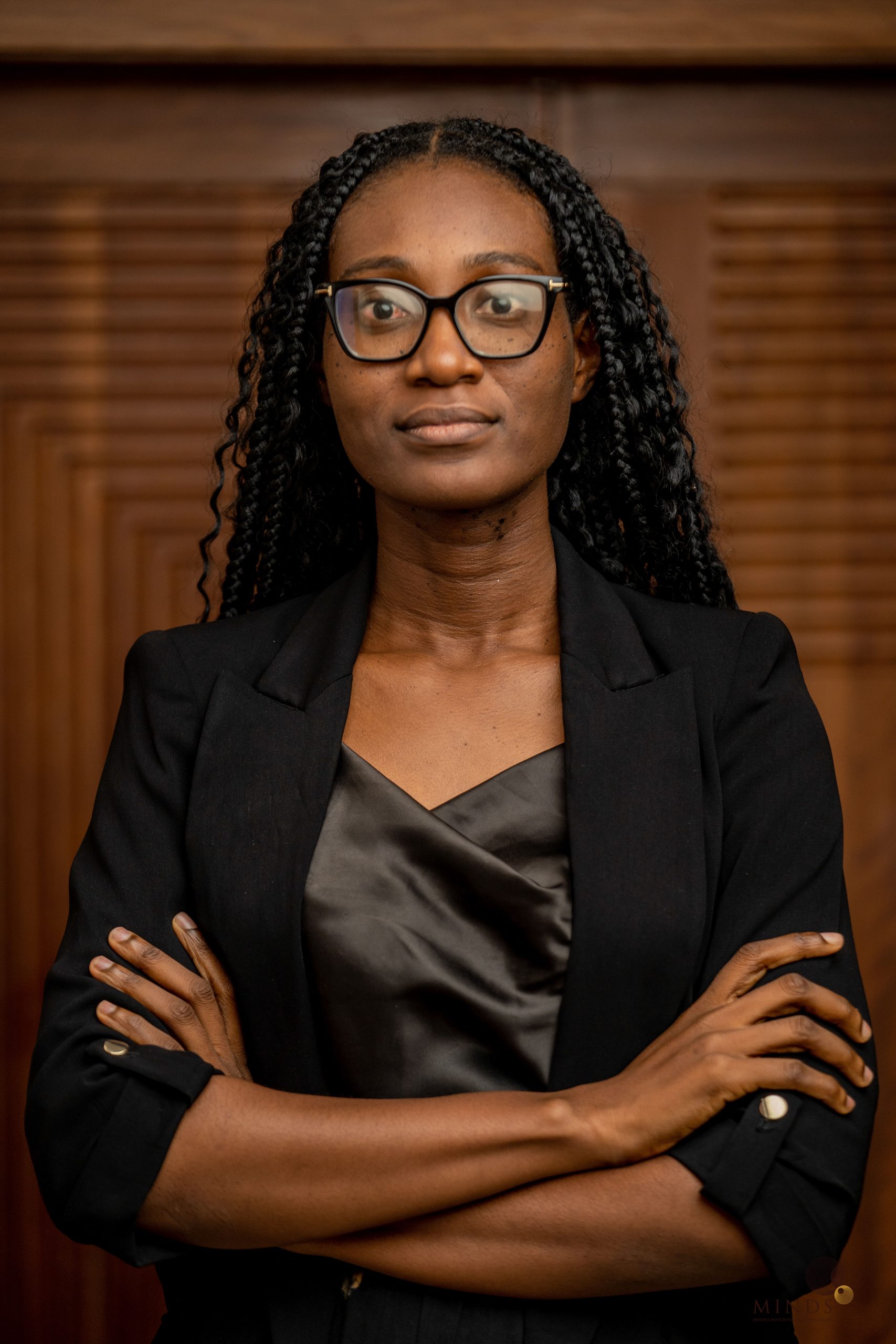
Written by Gifty Osei